

Chemistry at the school level is a subject that has the potential to enhance learning and various skills among young people. Schools are encouraging collaborations with the most established Chemistry Lab Equipment Manufacturers, that is, none other than School Science Equipment. The prime reason for this collaboration is to promote overall improved learning and performance. Chemistry is a vital subject that needs a wide range of equipment, from the chemistry lab equipment list efficiently compiled by the most experienced Chemistry Lab Equipment Manufacturer, i.e., School Science Equipment.
Learning With Equipment In Chemistry Lab Equipment List
Laboratories are the ultimate platform/forum for learning and experiencing science. When students are introduced to labs at a young age, they understand how labs operate and finally learn to experiment. It opens the door to unlimited knowledge and, eventually, excellent career prospects.
Chemistry labs with capable chemistry laboratory apparatus by A-grade Chemistry Lab Equipment Manufacturers broaden the horizons of experiential learning. Chemistry labs are found in academic institutions such as universities, research institutions, government agencies, and private companies. School Science Equipment is the leading supplier and the topmost manufacturer of primary and specialized chemistry laboratory apparatuses, which include fume hoods, analytical instruments, glassware, safety equipment, and more.
Lab Operations With Chemistry Laboratory Equipment Supplier
Chemistry laboratories need a wide range of chemistry laboratory equipment to conduct a wide variety of experiments for the following reasons:
- To conduct experiments to test hypotheses
- To investigate chemical properties and reactions
- To develop new compounds or materials with specific properties
- To improve existing chemical processes
- To ensure safety by testing the toxicity of chemicals, determining safe storage and handling practices, and identifying potential hazards.
For successful research and experimentation ventures, DIY projects, and fun activities in chemistry labs, you need the equipment from the most comprehensive chemistry lab equipment list by well-known chemistry lab equipment manufacturers.
Chemistry Lab Equipment List
Here are the most commonly used chemistry lab equipment and their use in chemistry labs:
Test Tubes
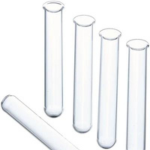
Use: Test tubes allow chemists to perform various functions.
- Chemists use test tubes to heat liquids, mix different substances, and hold small amounts of material for examination.
- They allow chemists to mix and heat substances (liquid and powdered) together and provide a safe way to handle dangerous chemicals.
- Chemistry Laboratory Apparatus Supplier supplies test tubes in various sizes and types. The different types of test tubes provided are:
- Capillary Tubes.
- Cryogenic Vials.
- Microcentrifuge Tubes.
- PCR Tubes.
- Centrifuge Tubes.
Beakers
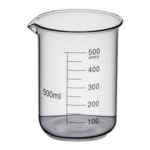
Use: Beakers are the multipurpose chemistry laboratory apparatus. The wide usage includes:
- Mixing, holding, and transferring liquids
- Heating liquids over burners, especially Bunsen burner
- Store safely and transport solids such as salts, powders, or crystals.
- Beakers can be used to mix and react with solutions. However, they are only sometimes the best choice for this purpose since they have a relatively large surface area and can allow for evaporation or contamination. The best option in this regard is graduated cylinders.
- They are manufactured in the following types:
- Low Form
- Tall Form
Graduated Cylinder
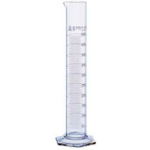
Uses: Provides accurate measurements of liquids with markings on them to indicate measures.
- They are often used with other laboratory equipment, such as beakers or flasks, to measure precise amounts of liquid for a solution.
- Dilution of solutions is done with graduated cylinders.
- The graduated cylinders help to determine the density of liquids. They are a vital component of the chemistry laboratory apparatus range.
Watch Glass
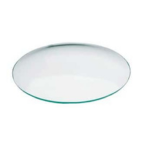
Uses: As the name suggests, the watch glass is used for close observation and easy examination under a microscope or visual inspection. Other purposes are:
- Watch glasses prevent the loss of the liquid due to evaporation while still allowing air to circulate and preventing pressure build-up.
- Watch glasses help to hold and store small samples of solids during weighing on a balance. They provide a flat surface and are easy to clean, making them ideal. Solids such as powders, salts, or crystals are often stored in them.
Volumetric Flasks

Uses: The leading chemistry lab equipment manufacturers often use volumetric flasks for these essential purposes:
- The volumetric flasks prepare accurate solutions and dilutions seamlessly.
- Volumetric flasks are specifically designed to prepare precise solutions with a known concentration.
- Volumetric flasks are very accurate and are used to measure liquid volumes precisely. Chemistry lab equipment suppliers supply them in different sizes, and the volume measurement is done using the calibration mark on the flask.
- Volumetric flasks calibrate other laboratory equipment, such as pipettes and burettes. They are prepared by preparing a known volume of a solution in the flask and then using it to measure the accuracy of the other laboratory equipment.
Petri dishes
Petri dishes are indispensable tools in any laboratory. They cultivate bacteria and other microorganisms to identify and assess their behaviors. Convenient disposable plastic plates supplied by top chemistry lab equipment suppliers, such as school science equipment, allow researchers to perform growth testing without risk of contamination or potential safety concerns.
They can also be used for other forms of testing, such as analyzing blood or urine samples to diagnose specific diseases in individuals. Such analyses can be complicated, and the right equipment must be utilized for accurate results.
Julius Richard Petri first invented the Petri dish out of glass in the late 19th century as part of his military physician work for Germany, working alongside Robert Koch (one of the fathers of microbiology). Petri created it to replace older techniques of cultivating bacteria, which often causes cross-contamination, with his new invention.
Cylinders
A cylinder is an invaluable laboratory tool that serves many scientific functions. From simple beakers and flasks to Erlenmeyer and Dewar flasks, cylinder-shaped laboratory glassware can be found everywhere – such as simple beakers, flasks, or even more advanced versions that hold Erlenmeyer or Dewar liquids.
Laboratory cylinders are often constructed from borosilicate glass, which offers superior chemical inertness and resistance to thermal shock. Their shapes vary according to specific experiment needs, such as distillation or titration—from long-necked Florence flasks for boiling liquids quickly to flat-bottomed Claisen flasks that stack easily.
Some cylinders feature graduated markings to indicate a precise volume, while others come equipped with stoppers for dispensing liquids. Test tubes also exist with narrow necks designed to be sealed off with caps; burettes provide precise liquid dosing.
pH Meter
A pH meter is an ingenious piece of laboratory equipment that uses electrodes to transform tiny electrical currents generated by electrodes into an accurate reading of pH level. It measures the concentration of hydrogen ions in solutions and displays them directly as pH units on its digital display. A combination of two electrodes—sensor and reference electrode—is immersed into the solution to generate an internal potential difference that is then converted by an amplifier into an accurate display reading on the meter’s display.
A pH meter can accurately assess acids, bases, neutrals, and other substances by measuring the degree of hydrogen ion activity present in their solutions. This activity gives rise to the characteristic pH value that ranges from 1 to 14; neutral solutions have an ideal pH level of 7. Acidic solutions may have higher hydrogen ion activity than hydroxide ions, while basic ones possess lower hydroxide activity compared with hydrogen ones.
Note that pH meters rely on temperature-dependent readings; all samples should be kept below 25 degrees C before testing to obtain accurate results. Some models even feature built-in thermometers, which automatically relay temperature readings for more precise readings.
More Lab Supplies Mentioned In Chemistry Lab Equipment List
Besides these, there is more chemistry lab equipment with precise uses for smooth research and solid experimentation.
- Thermometers
- Funnels
- Litmus Paper
- Dropper
- Pipettes
- Burettes
Safety equipment used in chemistry labs manufactured by chemistry lab equipment manufacturers are:
- Latex gloves
- Lab aprons
- Safety goggles
- Face shields &
- Respirators
Your Chemistry Lab Needs Chemistry Lab Equipment Exporter
Elevate your chemistry lab’s scope of operations by partnering with School Science Equipment, a trusted exporter of chemistry lab equipment. Chemistry lab equipment is the heart and soul of chemistry labs. It is indispensable, and the leading exporters take the complete onus of bringing the industry’s most durable, efficient, safe, and cost-effective laboratory apparatus. Connect with us and experience experimenting like never before. Our chemistry supplies are perfect for both research and industrial use.
Our products are renowned for their highest quality and are even backed by a warranty. We also offer various customization options to help our customers find the perfect equipment. Contact us today to learn more about our product offerings and to schedule a consultation.


